
If your practice has ever advertised or purchased an answering service as “HIPAA compliant,” it’s worth asking a direct question: Compliant according to whom? HIPAA compliance isn’t a badge a vendor gets to slap on a product page. It’s a real legal and contractual status, built on specific safe guards and a specific agreement and many practices don’t find out the difference until something goes wrong.

Why After Hours Calls Count as PHI Exposure
It’s easy to think of an after hours answering line as a low stakes convenience and as just a place for patients to leave a message until the office reopens. But the moment a caller shares a name, callback number, symptoms, or a reason for calling, that information is considered Protected Health Information (PHI) under HIPAA, whether or not the practice has thought about it that way. It doesn’t matter that the call happened at 9 pm instead of 9 am., or that it was handled by a third party vendor instead of in-house staff. Anyone who receives, stores, or transits that information on behalf of a covered entity is handling PHI, and HIPAA’s requirements follow the data, not the clock.
What Actual HIPAA Compliance Requires
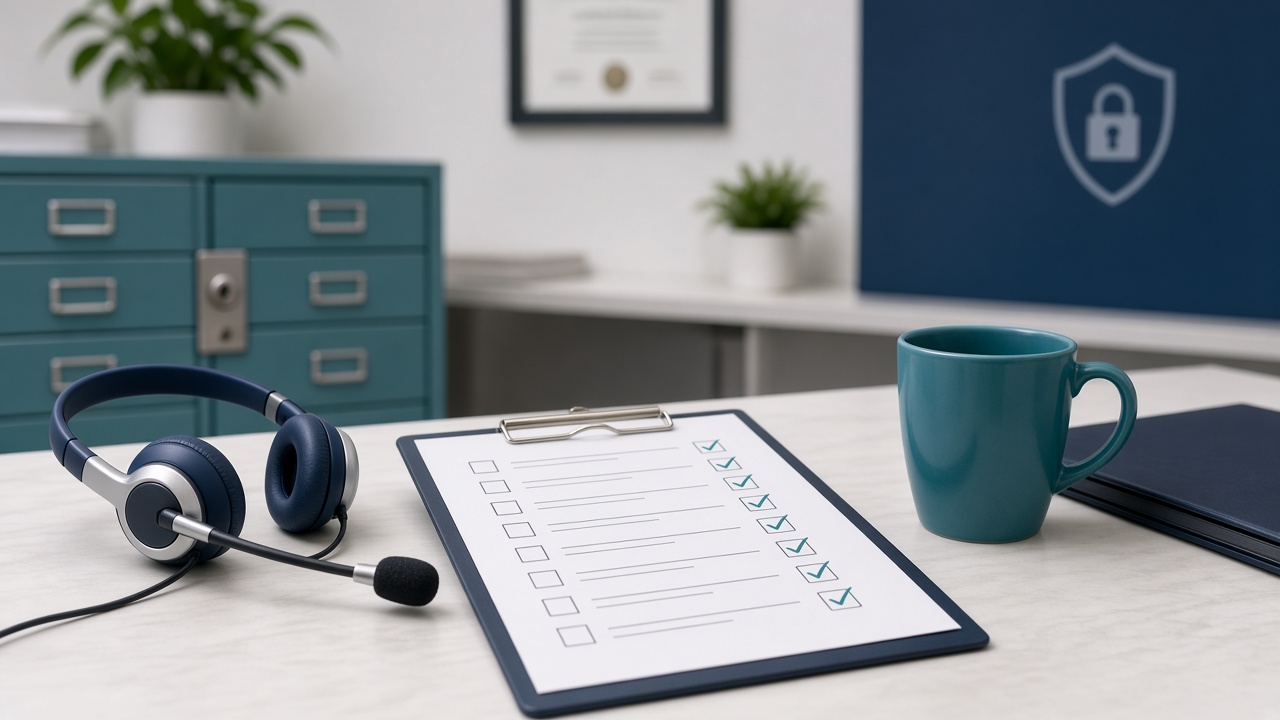
Effective HIPAA compliance for an answering service rests on several core safeguards, all of which a practice manager should be familiar with.
- A signed Business Associate Agreement (BAA). This is the foundation. Without a signed BAA between the practice and the vendor, there is no HIPAA compliance. A BAA is a legal contract that spells out how the vendor will protect PHI, what they’re allowed to do with it, and what happens if something goes wrong. No BAA means no compliance, regardless of what the vendor’s marketing says.
- Encryption in transit and at rest. Call recordings, transcripts, and message data need to be encrypted both while they’re being transmitted and while they’re stored; not just one or the other.
- Role-based access controls. Not every employee at a vendor should be able to see every patient’s information. Access should be limited to the people who actually need it to do their job.
- Audit logging. There should be a record of who accessed patient information and when, so that the practice can investigate if something goes wrong and so the vendor can demonstrate compliance during an audit.
No vendor is compliant “by default,” and no AI tool becomes compliant simply because it’s marketed as secure and HIPAA friendly. Compliance is established through documentation and contract, not through a feature list.

Questions to Ask Any Answering Service Vendor
Before signing with any after hours or overflow answering service vendor–whether it is AI powered, human staffed, or a hybrid of both, a practice manager must ask the following questions.
- Will you sign a Business Associate Agreement before we commit?
- Who, specifically, has access to call recordings and transcripts and how long are they retained before deletion?
- How are staff, or in the case of an AI system, the engineering and support teams trained on handing PHI?
- What happens during a system outage, or when a call gets handed off from an automated system to a human layer? Is that handoff point still covered under the same safeguards?
If a vendor is unable to answer these questions with clarity and detail, consider that a warning sign.
Where “AI Only” Tools Create Risk
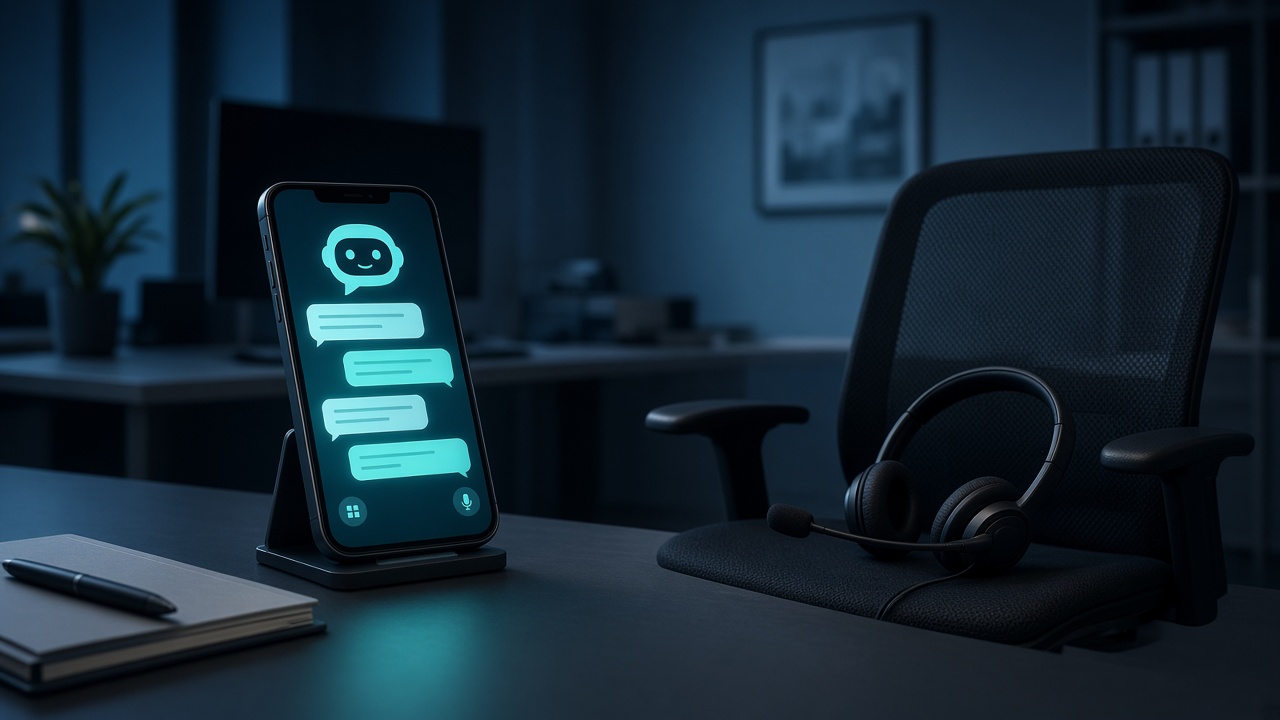
AI powered answering tools are becoming more effective at routing calls, taking basic messages, and handling simple scheduling requests. However, fully automated systems introduce the issue of compliance and compliance questions that are easily overlooked including the following: How is the call data logged, and by whom? Is there a clear, documented subcontractor chain if the AI vendor relies on third party infrastructure or models? Are encryption claims independently verified, or just stated in a sales deck?
These aren’t reasons to avoid automation entirely but reasons to ask these harder questions before trusting it with PHI. It’s part of why many practices, even ones open to some automation for routine daytime overflow, still choose a live agent or hybrid model specifically for after hours coverage, when there is not one from the practice available to catch an error before it becomes a real problem.

What This Looks Like Done Right
A medical answering service done right doesn’t just claim compliance. It can produce the paperwork. At Southern Voices, we operate under signed Business Associate Agreements with our medical clients, and our agents receive specialized training in HIPAA compliant call handling. They know what information to collect, how to document it accurately and how to approach every after hours call with the care and confidentiality required when handling protected health information.
If you are evaluating your current after hours coverage or questioning whether your existing vendor’s compliance claims are backed by the appropriate documentation, we are happy to help you understand what a thorough HIPAA compliance process should look like. Reach out at southernvoices.com or call 800-677-7406.
Frequently Asked Questions
Is an answering service "HIPAA compliant" just because it says so on a website?
No. HIPAA compliance isn't a marketing badge. It's a legal and contractual status built on specific safeguards and agreements. Practices should ask who verified compliance and demand documentation, not slogans.
Do after hours patient messages count as Protected Health Information (PHI)?
Yes. When a caller shares a name, callback number, symptoms, or reason for calling, that information is PHI under HIPAA. Time of day and whether a third-party vendor handles the call don't change that. HIPAA follows the data, not the clock.
What does actual HIPAA compliance require from an answering service?
Core pieces include a signed Business Associate Agreement (BAA), encryption in transit and at rest for recordings/transcripts/messages and role-based access controls, and audit logging of who accessed patient information and when. Without a signed BAA, there is no HIPAA compliance regardless of marketing claims.
What questions should a practice ask before signing with an after-hours vendor?
Ask whether they'll sign a BAA before you commit; who can access recordings and transcripts and how long they're retained; how staff (or AI vendor engineering/support teams) are trained on PHI; and what happens during outages or AI-to-human handoffs, including whether the same safeguards still apply. Vague answers are a warning sign.
Where do AI only after-hours tools create extra risk?
Fully automated systems raise questions about how call data is logged and by whom, whether there's a clear subcontractor chain for third party infrastructure or models, and whether encryption claims are independently verified. Many practices still prefer a live agent or hybrid model for after-hours coverage when no one from the practice is available to catch an error.
How does Southern Voices approach HIPAA compliant medical answering?
Southern Voices operates under signed Business Associate Agreements with medical clients, and agents receive specialized training in HIPAA compliant call handling including what to collect, how to document accurately, and how to treat every after-hours call with appropriate confidentiality. Reach out at southernvoices.com or call 800-677-7406.
Recent Comments