
Consider a caller’s experience: they call your business, select the prompt for Español and then are immediately placed in a slower holding queue to speak to a bilingual agent. By the time an agent picks up, the damage to your business's reputation has already been done.
Many businesses label this setup as bilingual support because it technically offers Spanish. However, there is a major difference between offering a language and delivering a seamless service. True bilingual support isn't a button on a phone menu. It is a commitment to an equal customer experience.

The Illusion of Bilingual Coverage
The most common version of “bilingual support” at small and mid-sized businesses isn’t actually a live bilingual team, it’s a series of clever workarounds. It looks like an IVR menu that routes Spanish speakers to a different queue, a voicemail box reserved for Spanish language messages, followed by a promise that “someone will call you back” once a bilingual agent is available.
These strategies aren’t inherently dishonest. They are the examples of practices a business uses to attempt to best serve Spanish speaking callers with the resources they have available at the time. Most small and mid-sized businesses don’t have the staffing to have live bilingual support 24/7. The real issue is the unintended message it communicates to the caller in the moment: Spanish is the exception being accommodated, not a standard our business is actually equipped to handle. For simple inquiries such as holiday hours, a work around may be sufficient. However, when a caller has a more complex issue or question, this barrier is unmistakably apparent.

Why the Gap Matters Most on High Stakes Calls
Not every call carries the same weight. A caller confirming a store address may be able to navigate a menu and a brief hold. However, a caller dealing with something urgent, emotional, or high stakes is very likely unable to navigate through a menu due to a language barrier. These are exactly the calls where language barriers do the most damage.
Think about who’s actually dialing your after hours line, your legal intake number, or your property management emergency line. It may be a patient describing a symptom they are concerned about, someone calling a law firm the day after an accident, or a tenant standing in an apartment with water on the floor. These callers are already stressed. Asking them to also navigate a menu, wait for a transfer, or explain themselves twice doesn’t just create friction, it can mean the difference between capturing the details that matter and an inaccurate or incomplete account of what actually happened.
A menu delay on a routine call is an inconvenience. A menu delay on an urgent call is a liability.

What "Live Bilingual" Actually Requires
True bilingual coverage isn’t a feature you add on to an English first phone system. An agent who can only handle “hello” and “please hold” in Spanish isn’t equipped for a caller trying to explain a complex legal issue or a medical concern. True bilingual coverage means your agents are able to fluidly conduct an entire conversation including but not limited to: asking follow-up questions and clarifications and all in the caller’s language. Achieving true bilingual coverage is a different operational commitment, and it comes down to three things:
- Identical Protocols- If your English callers receive structured, specific triage questions, and a defined and seamless next steps resolution, Spanish speaking callers must receive the exact same. They should never receive an improvised approximation because the scripts were not translated and built out.
- Zero Queue Disparities- The moment a caller has to press a different number, wait in a different queue, or get transferred to “whoever’s available,” you’ve created an unequal service model.
- Universal Live Answering-True bilingual coverage means every call is answered by a live agent regardless of the language spoken.

Questions to Ask Any Answering Service Vendor
If you’re evaluating a vendor’s bilingual claims, a few direct questions will tell you more than their marketing page will.
- Is a bilingual agent live on every shift, including nights and weekends-or only during business hours, with an after hours gap?
- Are your call protocols and scripts actually written and approved in both languages, or translated on the fly by whoever answers?
- Is there any point in the call path-a menu, a queue, or a transfer where a Spanish speaking caller experiences something different from an English speaking one?
A vendor should be able to answer all of these questions clearly and concisely.
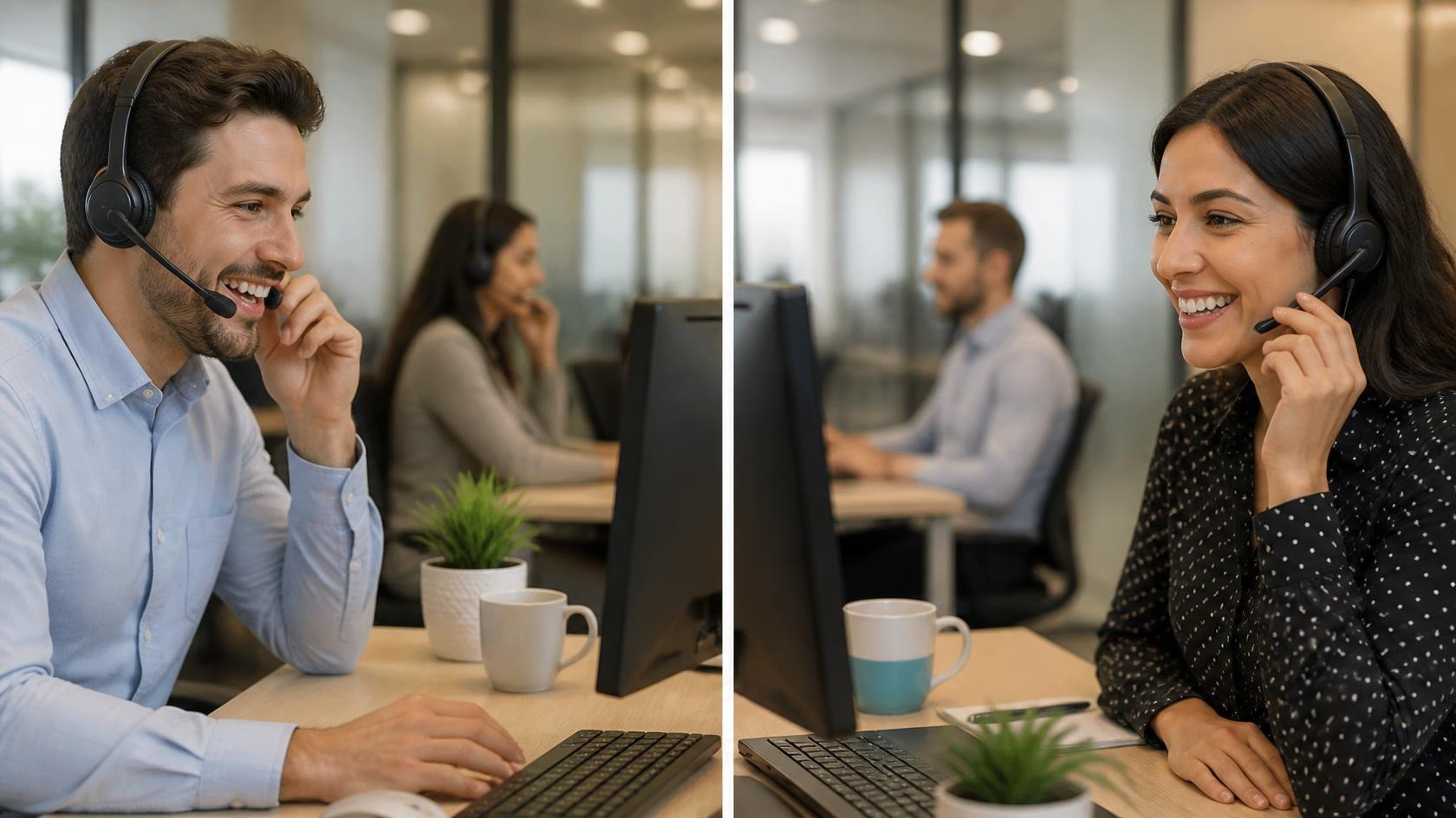
Bilingual Support Is a Design Choice
The difference between “we offer Spanish” and a caller actually reaching a fluent, live person on the first try isn’t a technology problem. Ultimately, it is a structural decision whether bilingual service is built directly into the foundation of your business or is merely an accommodation layered on top of an English first system.
At Southern Voices Inc., we integrate bilingual service directly into our foundation. Every single account receives live agents fluent in both English and Spanish from day one. We deploy matched protocols in both languages and eliminate the menus standing between a caller and a real person; no matter which language they speak. By embedding true bilingual capabilities directly into our infrastructure, we ensure your business always provides all customers regardless of language, equal service.
If you’d like to make this a reality for your business, we’re happy to walk you through it.
Contact us at southernvoices.com or 800-677-7406.
Why does a live bilingual agent matter?
A live bilingual agent can communicate directly with the caller, ask follow up questions, clarify important details and follow the appropriate call handling procedures in the caller’s preferred language. This can be especially important when the caller is upset, confused, or dealing with a time sensitive issue.
Does bilingual support need to be available after business hours?
If your business accepts calls after hours, bilingual coverage should be available for those calls as well. A business that provides live Spanish support during the day but routes Spanish speaking after hours callers to voicemail or a callback process has a gap in its bilingual coverage.
What should bilingual answering service scripts include?
Bilingual scripts and protocols should contain the same essential questions, instructions, procedures and next steps used for English speaking callers. The entire call handling process should be available in both languages.
Can a Spanish speaking employee simply take Spanish calls when needed?
That approach can create inconsistent coverage if the employee is unavailable. A structured bilingual answer service builds language coverage into the call handling process rather than relying on one employee to be available.
Are bilingual answering services only important for medical, legal, or emergency calls?
No. Any business can benefit from being able to communicate effectively with its Spanish speaking customers. However, the consequences of communication gaps can become more significant when a caller is dealing with an urgent or high stakes situation.
How can I tell whether an answering service provides true bilingual coverage?
Ask specific operational questions. Find out whether a fluent Spanish speaking agent is available on every shift including nights and weekends. Ask whether protocols exist in both languages and rather a Spanish speaking caller experiences the same call flow as English speaking callers. These questions can reveal whether true bilingual coverage is actually built into the service.
Recent Comments