
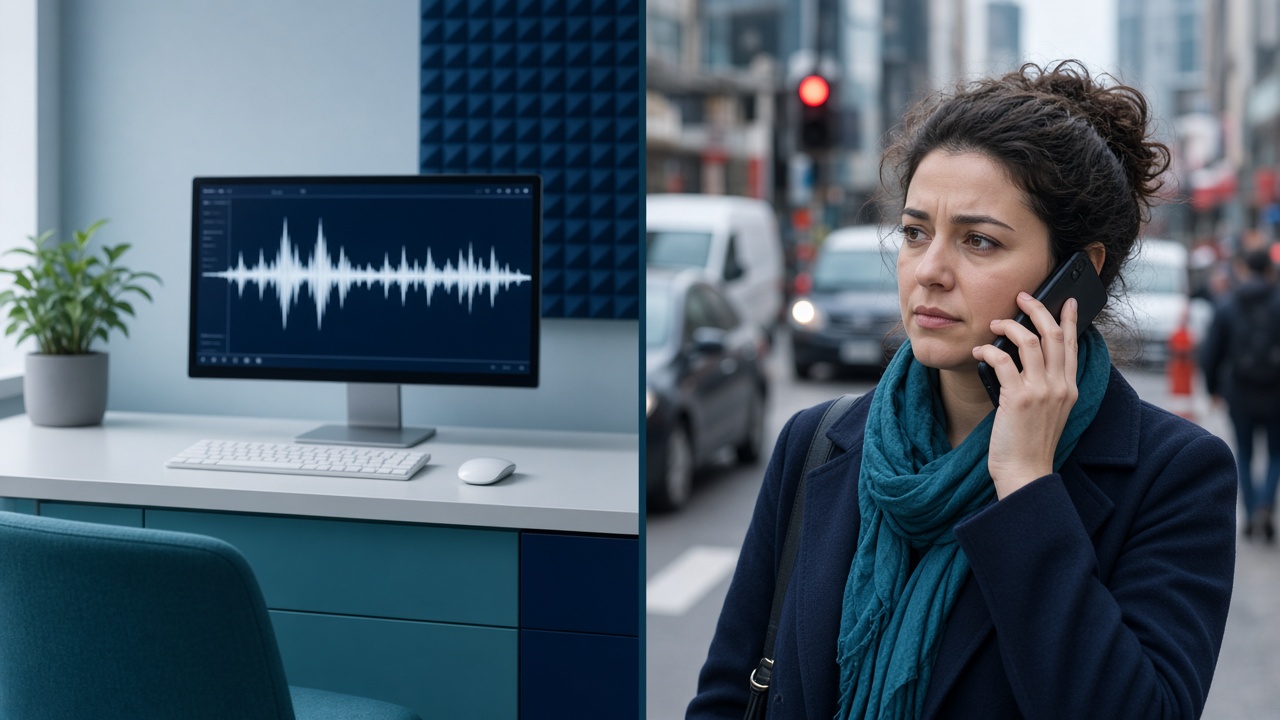
Most AI answering demos are recorded the same way: in a quiet room, utilizing a clear microphone, and one person speaking at a normal pace. Under those conditions, today’s best speech-recognition models are genuinely impressive. However, in this day and age nobody calls a business from a quiet room. Instead, they call from a car with the radio on, a job site, a crowded waiting room, or a cell phone with only one bar of signal. And that is exactly where AI speech recognition starts to break down, quietly at first without anyone noticing until a name gets spelled wrong or a callback number comes back one digit off.
The Lab to Real World Accuracy Gap
Speech recognition is typically measured by word error rate (WER) which is the percentage of words a system gets incorrect. According to 2026 research studies from AssemblyAI, today’s leading models can achieve accuracy >96% of the time when given clear, studio quality audio. However, that same research found accuracy drops markedly to around 91.8% once you move to real phone audio. This is nearly a 5-point swing just from switching to a normal phone call.
Accuracy continues to decline as call conditions become noisier. A 2026 industry breakdown from Forasoft on speech recognition in noisy environments puts expected WER at 5-10% for clear, quiet audio, 8-14% for typical office or meeting conditions, and 12-18% for call center or in-vehicle audio. These are the conditions that most business phone calls actually happen in. In other words, a system that appears flawless at 6% WER in a demo can exceed 30 % WER when exposed to background noise, cross-talk and mediocre cell signals that are common in everyday inbound calls.
The gap between the demo and the real world is where the real challenge lies. The issue isn’t that AI speech recognition is bad. It’s that the conditions it is tested under rarely reflect the real world environments where it actually has to perform.
What “One Word in Ten Actually Costs a Business
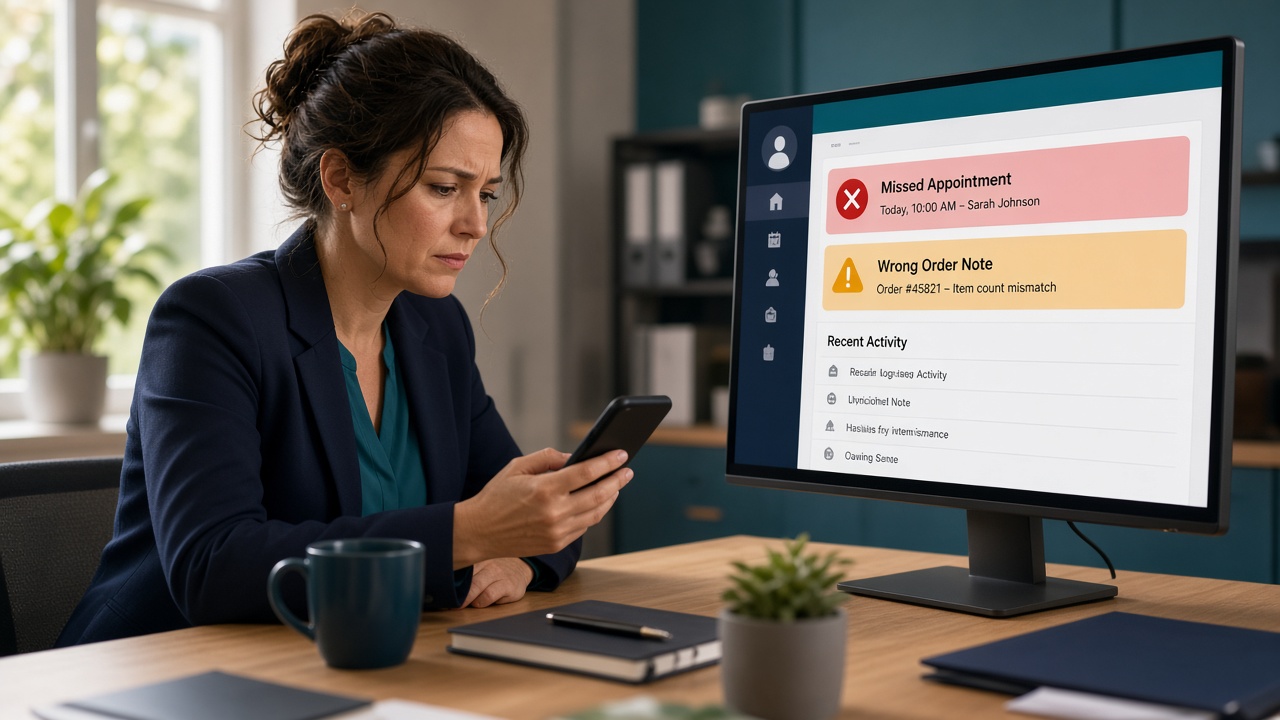
A word error rate in the low double digits sounds minor until you translate it into what actually happens in a call. It’s a last name that gets transcribed phonetically wrong such as “Jansen” instead of “Johnson.” It’s a callback number with one transposed digit, which means the message never reaches the right person and the customer is left to wonder why they did not receive a call back. It’s a street address, an appointment time, or a policy number that comes through just close enough to sound correct and just incorrect enough to cause a problem three steps down the line.
These aren’t hypothetical scenarios, they are the direct, predictable output of a system that’s incorrect roughly one in every six to ten words on a real phone line. And the caller usually doesn’t find out there is an error(s) until later, when the callback never comes, or the callback is to the wrong number, or references the wrong appointment time. At this point, though unaware the business has already made a bad first impression.
McDonalds Already Ran This Experiment
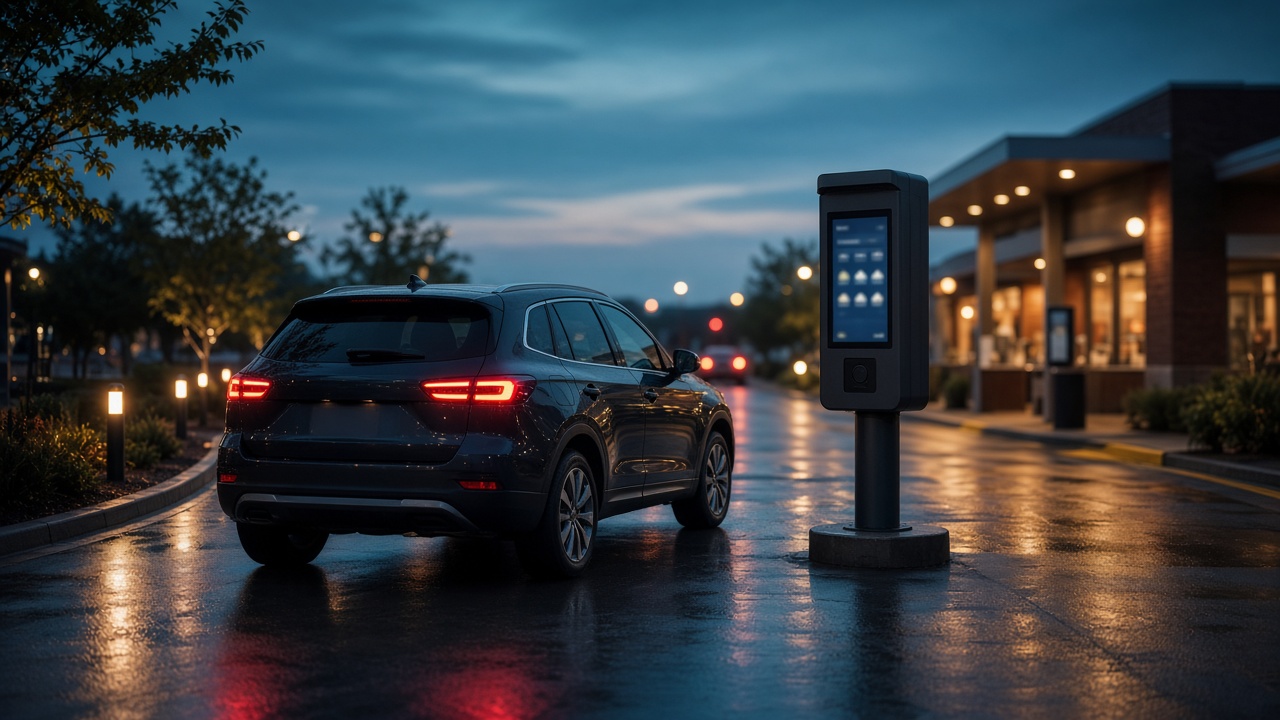
If this all sounds like a problem only a small business would encounter, consider a company that did run into this issue and had every resource to solve it. In 2024, McDonalds ended a two-year drive-thru AI ordering pilot program built in partnership with IBM. According to Restaurant Business Online, the AI ordering system was pulled from more than 100 U.S. locations after order accuracy plateaued at around 80-85% which is noticeably below the ≥90% accuracy of a human order taker typically achieves. The AI Incident Database, which tracks documented real-world AI failures, logged the same pattern: orders mixed between drive thru lanes, items added that customers never requested, and difficulty separating a customer’s voice from background noise and nearby conversations.
McDonald’s isn't a small business improvising with off the shelf software, it is one of the most resourced brands in the world, working with a major technology partner, in a controlled physical environment with a fixed set of menu items to recognize. If that combination is unable to close the accuracy gap, it’s a reasonable benchmark for what any business phone line is up against, where vocabulary is unpredictable, accents vary, and audio quality is inherently unpredictable.

The Stakes Get Higher in Healthcare
For most businesses, a flawed message may mean an awkward callback. However, for a medical office, the stakes are even higher. Research on text to text technology in clinical settings including coverage from Speechmatics on common medical transport errors and a systematic review published via ScienceDirect on AI voice to text in clinical documentation point to the same underlying risk. Notably, transcription mistakes don’t stay contained to a transcript. They carry forward into the record. A misheard patient name or an incorrectly captured date of birth on an after hours message can end up attached to the wrong chart, the wrong callback, or the wrong file entirely.
This is exactly why healthcare answering solutions can’t just optimize for speed or call volume. Accuracy on the details that identify the patient such as: name, date of birth, and callback number are essential and can be the difference between a message that helps a patient and one that creates real risk.

Where a Live Agent Still Wins
This is not to say that AI has no role in customer communication. It can be genuinely useful for simple, repetitive, low stakes tasks. However, a trained human agent is still much more reliable for calls where getting a name, number or a date exactly correct is needed. A live agent notices when something sounds unclear and asks the caller to repeat themselves. A live agent spells an unfamiliar last name back before hanging up. A live agent is able to read a callback number to confirm it and catch the kind of ambiguity that a transcription model simply records as its best guess and moves on.
At Southern Voices, every call day or night reaches a real, trained agent, not an automated system struggling to interpret imperfect audio. This isn’t a marketing claim. It’s a direct response to a well documented and measurable challenge: real world calls are far more complex than controlled lab audio, and businesses that rely on accurate information can’t afford to learn that lesson the hard way.
Ready to see what live, accurate call handling looks like for your business? Reach out at southernvoices.com or call 800-677-7406.
Frequently Asked Questions
Why does AI speech recognition work in demos but fail on real phone calls?
Most demos use quiet rooms, clear microphones, and steady speech. Real callers dial from cars, job sites, waiting rooms, and weak cell signals. Word error rate rises in those conditions, so names, numbers, and details get mistyped even when lab accuracy looks strong.
What is word error rate (WER), and what does a few points mean for a business?
WER is the share of words a system gets wrong. Leading models can look near-perfect on studio audio, then drop several points on real phone audio and further in noisy call-center or in-vehicle conditions. On a live line, that often shows up as a wrong last name, a transposed callback digit, or an almost-right address that causes problems later.
What did the McDonald's drive-thru AI ordering pilot show?
In 2024, McDonald's ended a multi-year IBM-partnered drive-thru AI pilot after order accuracy plateaued around 80–85%, below typical human order-taker accuracy near 90%. Documented issues included mixed lane orders, unordered items, and trouble separating a customer's voice from background noise even with a fixed menu and major resources.
Why are speech recognition mistakes especially risky in healthcare?
In medical settings, transcription errors can follow the patient into the record. A misheard name or date of birth on an after-hours message can attach to the wrong chart or wrong callback. Healthcare answering has to prioritize accuracy on identifying details not just speed or volume.
When does a live answering agent still outperform AI?
AI can help with simple, repetitive, low-stakes tasks. When a name, number, or date must be exact, a trained live agent is more reliable: they ask for repeats, spell unusual names back, and confirm callback numbers instead of locking in a best-guess transcription.
How does Southern Voices handle inbound calls?
Every call, day or night, reaches a real trained agent not an automated system guessing through imperfect audio. Learn more at southernvoices.com or call 800-677-7406.
Recent Comments