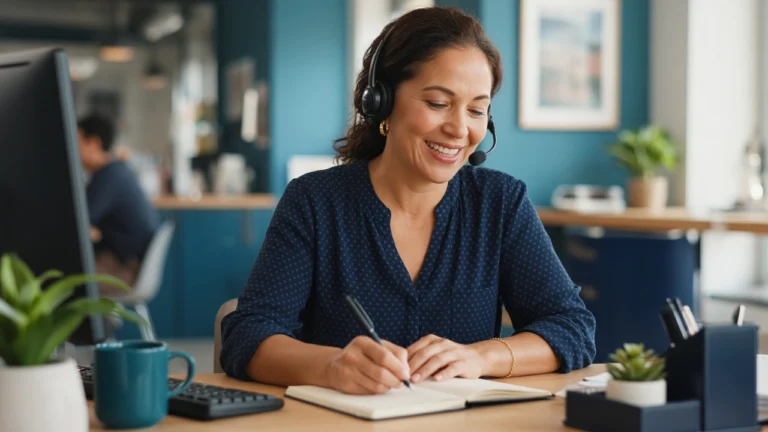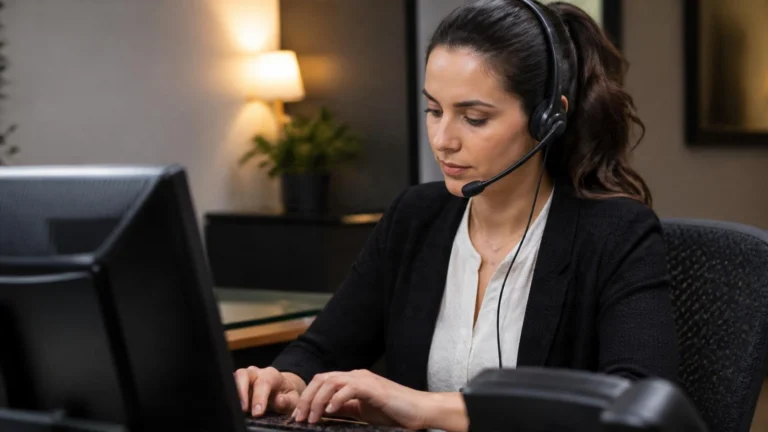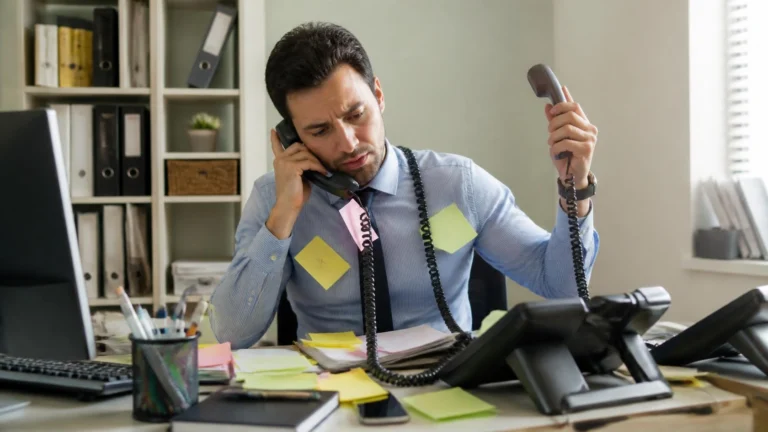
The first cell phone call was made on April 3, 1973, on a sidewalk in New York City. Martin Cooper, an engineer at Motorola, held a prototype handset the size of a brick and dialed a rival at Bell Labs to let him know Motorola had gotten there first. It took another decade for handheld phones to reach customers, but that call started a shift that changed how every business answers the phone. Callers now expect to reach someone, anywhere, at any hour, which is why so many companies rely on 24/7 live answering. Here’s how we got from there to here.
The first cell phone call: what happened in 1973
When was the first cell phone call made? On April 3, 1973. Cooper, who led Motorola’s portable communications work, walked along Sixth Avenue in Manhattan with a prototype of what became the DynaTAC. He called Joel Engel, who headed the competing cellular effort at Bell Labs, part of AT&T. The call itself was short. Its message was not: a phone didn’t have to be tied to a desk, a wall or a car.
The prototype weighed more than two pounds and its battery allowed only a short conversation. Even so, it proved that a personal, handheld phone could work on a cellular network. Motorola’s first commercial handheld, the DynaTAC 8000X, went on sale in 1983 for close to $4,000. For years, cell phones stayed expensive tools for executives and a few professionals rather than something everyone carried.
Before the cell phone: how businesses answered calls
For most of the twentieth century, a business phone was a fixed line in a fixed place. If nobody was at the desk, the call went unanswered. The fix was people.
Larger companies had switchboard operators who answered and routed calls. Smaller businesses and professionals turned to telephone answering services: offices staffed by operators who answered clients’ lines when the client couldn’t, took messages and passed them along. Doctors were among the earliest and most dependable customers, because patients needed a way to reach someone at night. That basic idea, a trained person answering in your name when you can’t, is still the core of an answering service today.
When was the answering machine invented?
The idea of recording a phone call is older than most people expect. Danish engineer Valdemar Poulsen demonstrated his telegraphone, a magnetic wire recorder that could record telephone conversations, in 1898. Commercial telephone answering machines followed in the mid-twentieth century, but for decades they were costly and uncommon.
A turning point came in 1968, when the Federal Communications Commission’s Carterfone decision allowed customers to connect their own equipment to the phone network. That opened the door to consumer devices, and by the 1980s answering machines had become a normal sight in homes and small offices. Around the same time, larger organizations began adopting voicemail systems that stored messages centrally.
Machines solved one problem: they caught messages when nobody answered. They didn’t solve the bigger one. A recording can’t tell a routine question from an emergency, and it can’t help the caller right now.
Pagers, on-call schedules and the always-reachable professional
As cell phones were still finding their footing, pagers filled the gap. Through the 1980s and 1990s, doctors, technicians and managers clipped them to their belts so they could be reached away from a phone. Answering services adapted: instead of only taking messages, operators began paging on-call staff, working through call lists and connecting urgent callers.
This is roughly when Southern Voices started. We were founded in 1995 in Winston-Salem, North Carolina, by a physician, and we are still physician-owned. The same work, answering in our clients’ names and reaching the right person when it matters, has carried us through more than 30 years of changing technology.
Smartphones and the always-on caller
By the late 2000s, smartphones put the internet, email, maps and a phone in the same pocket. That changed callers more than it changed businesses. Today a customer can search for a plumber, read reviews and tap to call within a minute. If the first business doesn’t answer, the second one is just as close.
The result is a new expectation. Callers assume someone will pick up, whether it’s 2 p.m. on a Tuesday or 2 a.m. on a Sunday. For a medical practice, a property manager or a contractor, the after-hours call is often the most important one of the day.
What answering services look like today
Modern answering services keep the human core and add the tools that came with each era:
- Live agents around the clock. Southern Voices answers 24 hours a day, 365 days a year.
- Bilingual coverage. Live agents in English and Spanish, not a recorded “press 2” option. See our bilingual answering service.
- Custom scripts and escalation trees. Agents follow your instructions for every type of call and know exactly who to reach, in what order.
- Phone patching. Urgent callers can be connected live to your on-call person, wherever they are.
- Secure message delivery. Messages arrive by secure text, email or an online portal, not just a voicemail light.
- Self-service schedules. Clients update on-call rotations and instructions in a client portal, so changes take effect right away. Our guide to updating a rotating on-call schedule shows how.
- Integrations. We can build API integrations with platforms that offer an API, and agents can work directly inside client systems such as scheduling software when given access.
- Healthcare safeguards. For medical clients, agents are HIPAA-trained and we sign Business Associate Agreements. Learn more on our medical answering service page.
Where AI fits
AI voice tools are the newest chapter. They can handle simple, predictable requests, like hours or directions. Real phone calls are messier: accents, background noise, poor connections and stressed callers all trip them up. Our article on why real phone calls still break AI speech recognition explains why. For calls where judgment matters, people are still the better answer.
What hasn’t changed since 1973
The phone has gone from a two-pound prototype to a slim device everyone carries. What a caller wants has barely moved: to reach a real person who understands the problem and can do something about it. Every new technology has raised the bar for how quickly that should happen. The businesses that meet it are the ones that make sure someone is always there to answer.
Frequently asked questions
When was the first cell phone call made?
The first public call from a handheld cell phone was made on April 3, 1973, by Motorola engineer Martin Cooper on a street in Manhattan.
Who did Martin Cooper call on the first cell phone call?
He called Joel Engel, who led the rival cellular project at Bell Labs, part of AT&T. Motorola and AT&T were competing to build the first practical cellular phone.
When was the answering machine invented?
Magnetic recording of phone calls dates to Valdemar Poulsen’s telegraphone in 1898. Commercial answering machines appeared in the mid-twentieth century and became common in homes and offices in the 1980s, after rule changes let customers connect their own equipment to the phone network.
Are answering services still relevant with smartphones and voicemail?
Yes. Smartphones made callers expect a faster answer, and voicemail still can’t help a caller in the moment or recognize an emergency. Live answering services fill that gap with people who can take action on the call.